

Are Gorillas Friendly? Understanding Africa’s Gentle Giants
Explore the true nature of gorillas with Miana Tours & Travel – from their emotional depth to their protective wild instincts, and what to expect when you meet them in Uganda’s misty forests.
Gorillas are often portrayed as fearsome giants, beating their chests and charging through dense forests. Yet anyone who has trekked into the emerald depths of Bwindi Impenetrable Forest or Rwanda’s Volcanoes National Park knows a very different reality. These magnificent primates are peaceful, emotionally intelligent, and deeply family-oriented. Their gentle eyes and calm demeanour reveal a species far more nuanced than popular culture suggests.
At Miana Tours & Travel, we have guided countless visitors into the heart of gorilla territories – and every encounter is overwhelmingly described as “life-changing,” “humbling,” or “surprisingly emotional.” This article dives into the true behaviour of gorillas, why they are generally calm around humans, the rare situations where they can be aggressive, and how you can respectfully and safely meet them in the wild.
Are Gorillas Friendly? A Closer Look at Their True Nature
Gorillas are often labelled as intimidating simply because of their enormous size. A fully grown silverback can weigh up to 200 kilograms and possesses immense strength. However, despite this physical power, gorillas are naturally peaceful, shy, and non-aggressive creatures who prefer avoiding conflict.
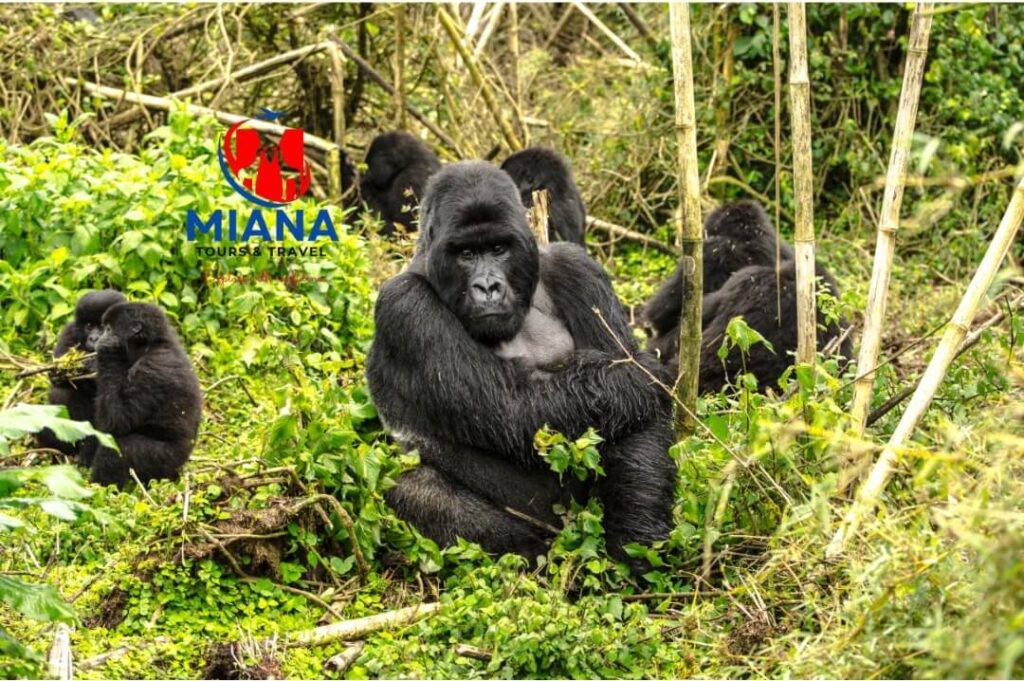
These herbivorous apes live in tightly bonded family groups led by a dominant silverback who guides, protects, and nurtures the troop. Their daily routines revolve around feeding, resting, grooming, and caring for their young – behaviours that reflect tenderness rather than hostility.
Gorillas communicate emotionally through body language, facial expressions, and vocalisations. They comfort distressed infants, form deep social relationships, and even display playful behaviour similar to young children. While they are not “friendly” in the domestic sense, they are peaceful animals capable of showing remarkable gentleness.
How Gorillas Interact with Humans During Trekking
For decades, researchers and conservation teams have used a process called habituation – a slow, respectful method that gradually familiarises gorillas with human presence. This ensures that when tourists visit, the gorillas remain relaxed and continue behaving naturally.
During gorilla trekking, visitors often witness mothers cradling babies, juveniles swinging playfully between branches, or a silverback quietly observing his surroundings. The calmness of these interactions reflects the trust built over years of gentle, ethical conservation work.
In rare moments, a gorilla may approach a visitor out of curiosity – usually a youngster trying to explore. Guides instruct guests not to touch the gorilla, reinforcing respect for wildlife while ensuring everyone remains safe.
Are Gorillas Dangerous? What You Should Know
Gorillas are not naturally dangerous to humans. In fact, humans pose a much greater threat to them through habitat loss, poaching, and disease. Most gorilla encounters are peaceful, awe-inspiring experiences guided by strict conservation protocols.
However, they are still wild animals with protective instincts. They can become aggressive if they feel threatened – usually giving warnings such as chest-beating, grunting, or mock charging before escalating.
When Do Gorillas Become Aggressive?
- If they feel their infants are threatened
- If visitors approach too quickly or too closely
- If their feeding or resting routine is interrupted
- If they are startled by loud noises or sudden movement
- If a silverback senses a challenge
- Maintain a 7-meter distance during treks
- Follow your ranger’s instructions at all times
- Avoid direct eye contact (it may seem confrontational)
- Stay calm, quiet, and move slowly
- Never attempt to touch a gorilla, even if it approaches
Where Can You See Gorillas in the Wild?
Gorilla trekking is only possible in a handful of protected mountain and lowland forests in East and Central Africa. These regions are home to habituated groups that visitors can safely view under the supervision of expert rangers.
- Uganda: Bwindi Impenetrable National Park & Mgahinga Gorilla National Park
- Rwanda: Volcanoes National Park
- DR Congo: Virunga (mountain gorillas) & Kahuzi-Biega (eastern lowland gorillas)
Uganda’s Bwindi and Mgahinga parks offer some of the world’s most rewarding gorilla experiences – combining dramatic landscapes, rich biodiversity, and well-preserved gorilla populations protected by dedicated conservation teams.
What Is Gorilla Trekking Like? The Miana Tours Experience
Gorilla trekking is an immersive, adventurous, and emotional journey through some of Africa’s most ancient forests. With Miana Tours & Travel, the experience is thoughtfully curated to ensure comfort, safety, and meaningful connection with nature.
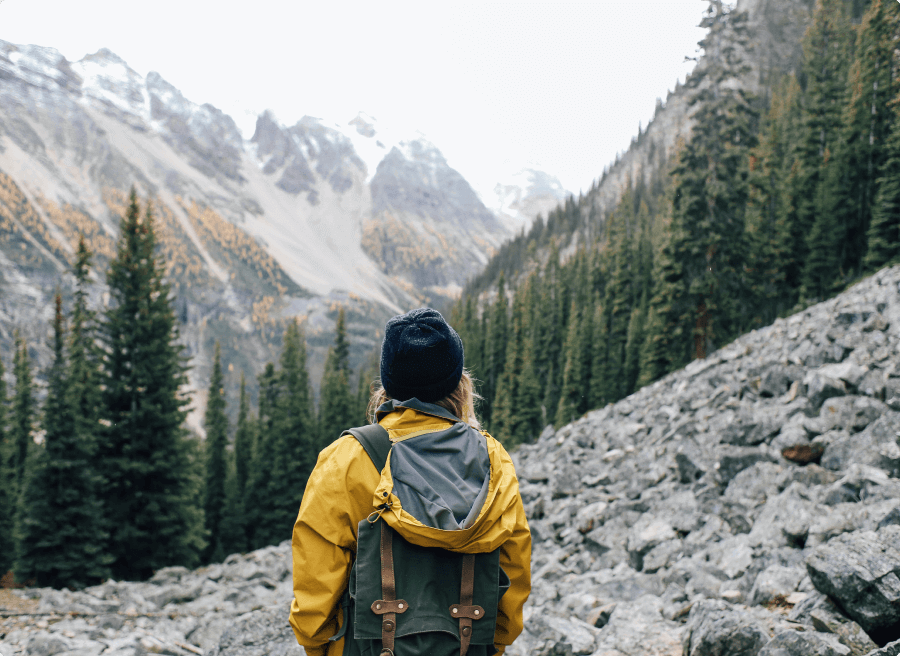
The trek begins with a briefing from highly trained rangers, followed by a hike through misty jungles, tangled vines, and rugged terrain. The duration can range from one hour to six, depending on where the gorillas nested the previous night.
When you finally locate a gorilla family, you are allowed a magical hour in their presence. This is often described as one of the world’s most profound wildlife encounters – watching infants tumbling over one another, mothers gently grooming their young, and the mighty silverback observing his family in dignified silence.
Many visitors find themselves unexpectedly emotional. The closeness, the expressions, the calmness – all of it creates an unforgettable connection between humans and one of the planet’s most remarkable species.
Why Gorilla Conservation Matters
Gorillas are critically endangered, with threats including habitat loss, illegal hunting, human-wildlife conflict, and diseases transmitted from humans. Every trekking permit contributes significantly to conservation efforts, anti-poaching patrols, and community development around protected areas.
By choosing responsible travel with Miana Tours & Travel, you play a vital role in ensuring gorillas – and the forests they call home – survive for future generations.
Trekking Tips
- ✔ Wear sturdy hiking boots
- ✔ Pack lightweight rain gear
- ✔ Carry enough drinking water
- ✔ Bring a walking stick (often provided)
- ✔ Hire a porter to support local communities
Did You Know?
Gorillas share up to 98% of their DNA with humans, making them our closest relatives after chimpanzees.
© 2025 Miana Tours & Travel. All Rights Reserved. Explore Africa Responsibly.